🚢 Main Branch: The One Where Teams Stop Multiplying
Hiya friends,
Two changelog items showed up this week. One saves you from doing the same boring thing fifty times. The other can break your Windows CI if you miss it.
🚢 What Shipped
Enterprise Teams is now generally available
If you run more than a handful of orgs, you know the pain: the same SRE team recreated and reconciled across every single one. Enterprise Teams lets you define a group once at the enterprise level and assign it to roles across every org underneath. Route PR reviews to one security team across 50 orgs without maintaining 50 copies. Grant break-glass ruleset bypass to a platform team once and have it apply everywhere they touch. Let your identity provider handle membership end to end. Fewer team copies to babysit.
Actions windows-latest moves to Visual Studio 2026
Heads up if you build on Windows runners. Starting June 8, the windows-latest and windows-2025 labels migrate to Visual Studio 2026 by default. The rollout finishes by June 15. If your build depends on something in VS 2022, this can break quietly. If you need to stay put, pin to windows-2022. If you want to test the new image before the switch, set runs-on: windows-2025-vs2026. The macos-latest migration to macOS 26 starts June 15 and runs for about 30 days. Check your matrix before next week gets annoying.
📖 What I’m Reading
The AI IPO Race by Robert Scoble and Irena Cronin
Scoble and Cronin look at the capital side of the AI race, with Anthropic, OpenAI, and SpaceX all getting closer to public markets. AI does not scale like normal software. Every query costs compute. More usage means more revenue, but also more cost. Fidelity also cut its SpaceX IPO minimum from $500K to $2K, so retail buyers may be part of that debut, too.
Worth your time if: you build with AI tools daily and want to understand the money math underneath them.
🔧 What I’m Using
This week I’m using Git worktrees more intentionally. When I’m prepping a demo or testing a change, I don’t want my clean branch and my messy branch fighting each other in the same folder. A worktree lets me check out a fresh branch into a separate directory:
git worktree add -b demo-clean ../demo-clean mainNow I can keep one copy of the repo ready for recording, and use another one to poke around. That’s the bit I care about. Demo prep is already stressful. I don’t want one tiny test to mess with the exact state I need on camera. With worktrees, I can try something, break it, and still have the demo branch sitting there untouched.
git worktree list
git worktree remove ../demo-clean
If you record demos, write tutorials, or test risky changes, put worktrees in your Git muscle memory.
✨ This Week
I was at Microsoft Build, then stayed for the GitHub Universe content committee. GitHub showed up strong at Build, but reviewing talks is what got me going. The pool had range: technical problems, complex systems, open source, maintainers, community, craft, and the work that actually matters. This year’s event is going to be good.
Part of Build for me was a livestream where I built a little GitHub-auth check-in wall for the chat. Was it polished? Absolutely not. Was it unserious in the best possible way? Yes.
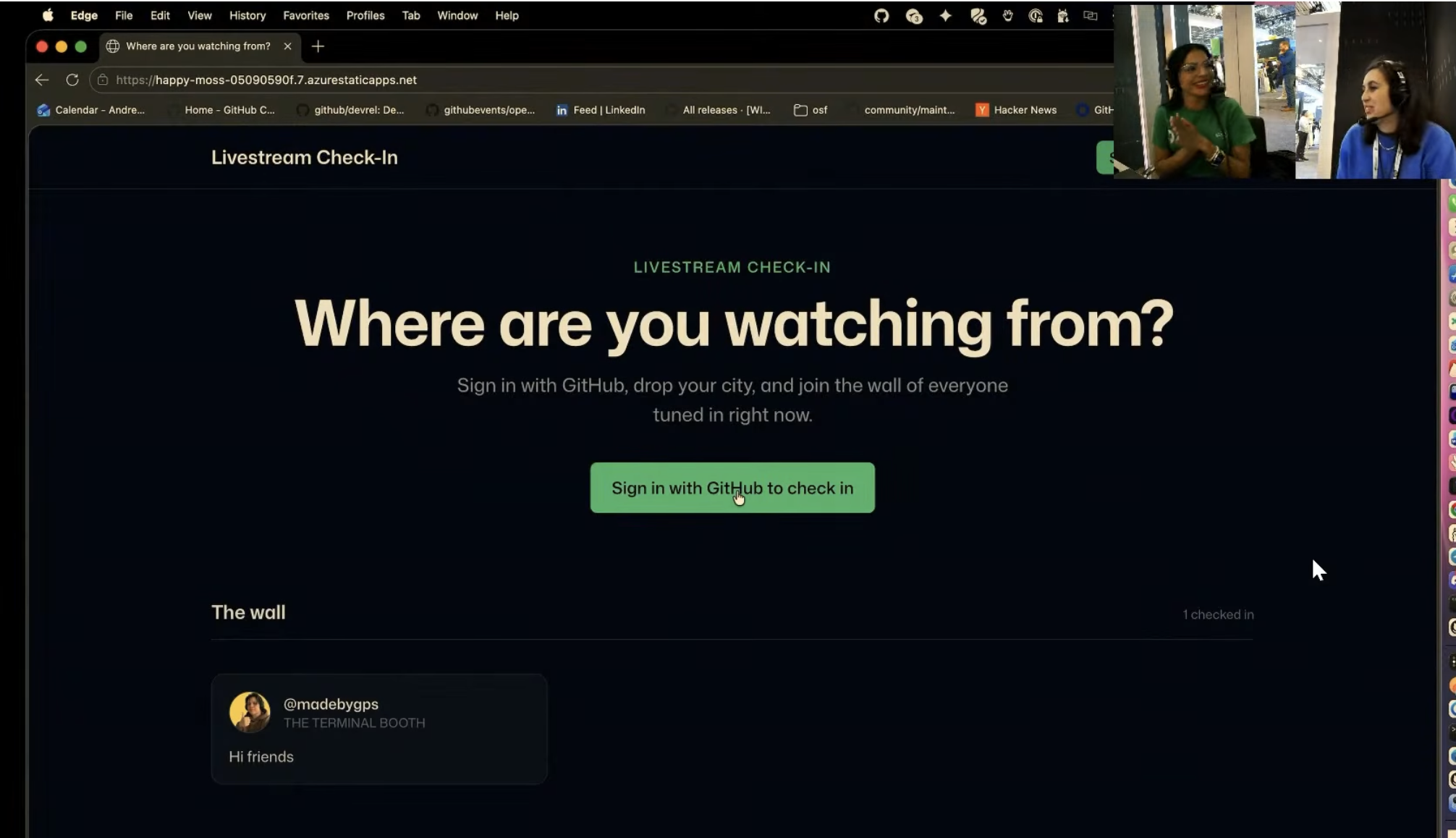
Rubber Duck Tuesday with Andrea Griffiths & Cassidy Williams
That was kind of the point. If you cannot have fun while building something live on the internet, what are we even doing?
I came home tired and grateful for the people who make this community real.
See you next week.
With gratitude, Andrea
Subscribe to Main Branch
Join developers shipping real features. Every issue is a three-minute read packed with fundamentals you can apply today.
No spam. Unsubscribe anytime.