Articles
Your AI Ships Code While You Sleep. Who Maintains It When You Wake?
People are waking up to working code they didn't write. AI coding agents build features autonomously, but who handles the growing maintenance debt? Here's what happens when coding agents and maintenance workflows collide.
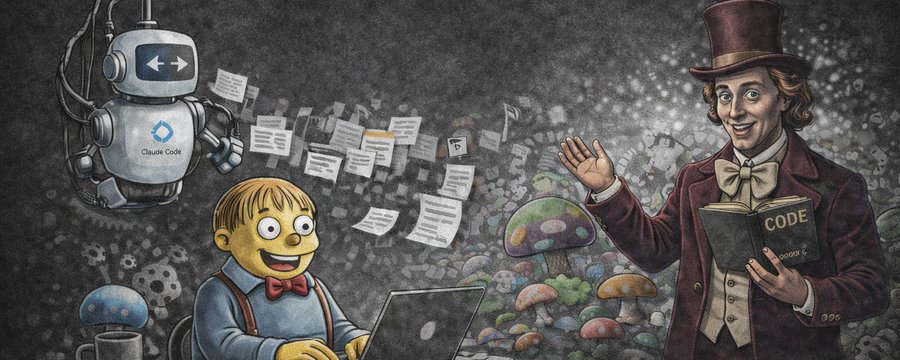
Your AI Ships Code While You Sleep. Who Maintains It When You Wake?
People are waking up to working code they didn’t write. One developer shipped a $50,000 contract for $297 in API costs. That’s the kind of number that makes you check your terminal twice.
AI coding agents build features autonomously, but here’s the thing nobody’s talking about yet: who maintains it when you wake up?
Meet Ralph (and the Loop Pattern)
Ralph runs AI coding tools like GitHub Copilot Coding Agent or Claude Code in autonomous loops. You give it a PRD, it picks a task, builds it, tests it, commits it, moves to the next. All night. All weekend.
The technique is spreading fast. GitHub has it. Vercel has it. Claude has it. Same pattern: copilot becomes autopilot.
If you have a Copilot license already, you’ve got the engine. You don’t even need a new subscription. Ralph is just a shell script pattern, so you can swap the engine. Pipe the autonomous logic into GitHub Copilot CLI instead of Claude Code if that’s what you’re running.
If you already have the tool, you already have the engine to build while you sleep.
But here’s where it gets tricky.
The Maintenance Debt You’re Not Calculating
Shipping 5x faster means creating repositories 5x faster. More features. More dependencies. More drift. More staleness.
When’s the last time you checked all your dependencies for CVEs? When’s the last time you verified your docs actually match your code? After an agent adds 47 new functions, who’s tracking if test coverage still makes sense? Who’s monitoring if your CI pipeline is even efficient?
Probably nobody. You’re queuing up the next run.
This is where GitHub Next’s Peli’s Agent Factory gets interesting, because they asked a different question: what if we built agents to maintain the repositories while other agents build features?
Peli’s Agent Factory: Building Agents That Maintain
Peli’s Agent Factory is what happens when a team treats “let’s create an automated agentic workflow for that” as the answer to almost every maintenance problem. They built over 100 automated workflows and ran them in real repos to see what breaks and what works.
Most repos won’t need dozens of agents. No one can read all those outputs anyway. But by pushing to the extreme, they discovered what makes agents safe, effective, and trustworthy.
Here’s the key distinction: these aren’t agents that build features. These are agents that maintain repositories.
The workflows triage issues, diagnose CI failures, check documentation consistency, monitor security compliance, and improve test coverage. The coding agents build. These workflows maintain.
Take CI Doctor. Your CI fails. You get the alert but you’re in a meeting. CI Doctor runs automatically, reads your CI logs, figures out what broke, and opens an issue with the root cause analysis ready to go. No guessing. No hunting through red-blinking dashboards. The context is already there.
Here’s what that looks like in a GitHub Agentic Workflow:
---
on: workflow_run_failure
permissions:
	contents: read
	issues: read
	pull-requests: read
safe-outputs:
	create-issue:
		title-prefix: "[CI Diagnosis] "
		labels: [bug, ci-failure]
---

## CI Doctor

Analyze the failed GitHub Actions workflow.

- Read the workflow logs
- Identify the root cause
- List the files that need changes
- Explain why it failed and what went wrong
The factory spans 19 categories: issue and PR management for triage and labeling. CI diagnostics that read logs and explain root cause when tests break. Documentation checks that catch drift between code and README. Security workflows that flag CVEs before they become incidents. Testing tools that show which new code lacks coverage. Code quality suggestions for refactoring opportunities. Even culture workflows that write poetry to boost team morale.
Two Shifts, One Problem
First: AI agents build features autonomously. GitHub Copilot Coding Agent, Ralph loops, Claude Code. They all compress the idea-to-code timeline.
Second: maintenance burden grows faster than teams can handle. More code. More dependencies. More compliance surfaces. More security attack surface. “Clean this up later” doesn’t scale when “later” hits daily.
What I’m Experimenting With
I want to try both in my own projects. Use the Coding Agent to build features I’ve been pushing off, then follow up with maintenance workflows to keep it sustainable.
Can a doc checker catch when the agent’s code doesn’t match my README? Can test coverage workflows flag gaps introduced during the night? What happens when building agents and maintenance agents run in the same repo? Do they complement or conflict?
Waking up to working code is exciting. Waking up to maintainable code is better. The autonomous coding future isn’t just about building faster. It’s about maintaining smarter.
Learn More
- GitHub Agentic Workflows - experimental project from GitHub Next
- GitHub Copilot Coding Agent - autonomous coding features
- Claude Code - Anthropic’s coding assistant
- Ralph for Claude Code - autonomous loops
About the Author: Andrea Griffiths is a Senior Developer Advocate at GitHub, where she helps engineering teams adopt and scale developer technologies. She's passionate about making technical concepts accessible—to both humans and AI agents. Connect with her on LinkedIn, GitHub, or Twitter/X. · Read in Spanish